
Pour a glass of Fountain Valley tap water, take a sniff, and some days it smells faintly like a swimming pool. That chlorine note is one of the questions we hear most from local homeowners, and it usually comes with a follow-up: is that safe, and can I get rid of it? The short answer is that the smell comes from the disinfectant your utility uses to keep the water free of germs, and while it is safe to drink, it is easy to remove if you do not like the taste. Here is what that chlorine smell actually is, why it is there, and what your options are for a better glass of water in Fountain Valley.
- Utilities add a disinfectant, usually chlorine or chloramine, to tap water to kill germs as it travels through the pipes to your home.
- The CDC says the low levels of chlorine or chloramine allowed in drinking water, up to 4 milligrams per liter, do not make people sick.
- Chlorine has disinfected U.S. tap water since 1908; chloramine has been used since 1929.
- Chlorine tends to produce more of the pool smell and more disinfection byproducts than chloramine.
- Disinfection byproducts form when a disinfectant reacts with organic matter in the water, and utilities manage them to stay within federal limits.
- A simple carbon filter removes the chlorine taste and smell at the tap.
- Fish tanks, reptiles, amphibians, and home dialysis need the disinfectant removed first, and chloramine is harder to remove than chlorine.
Why does Fountain Valley tap water smell like chlorine?
The chlorine smell is the disinfectant doing its job. According to the CDC, water utilities add a disinfectant such as chlorine or chloramine to tap water to kill germs that can be present in the source water or that get in as the water travels through miles of underground pipes. Fountain Valley draws much of its water from the Orange County groundwater basin, which the Orange County Water District manages for 19 cities and roughly 2.5 million residents, and that water is disinfected before it reaches your tap. The CDC notes that water with chlorine can taste and smell different from untreated water, and that the smell is stronger when chlorine levels are higher or when there is more dirt and other particles in the water. In other words, the pool smell is a sign the water is being protected, not a sign that something is wrong.
Is the chlorine in your tap water safe?
Yes. The CDC states plainly that the low levels of disinfectants allowed in tap water do not make people sick. Chlorine or chloramine levels up to 4 milligrams per liter, which is the same as 4 parts per million, are considered safe in drinking water, and those levels are enough to keep killing germs all the way to your faucet. Utilities check water quality regularly, and the type and level of disinfectant in your water appears on the annual water quality report your provider is required to publish. If you want to see exactly what your utility uses and at what level, that report is the place to look. The chlorine you smell is there to prevent the far more serious problem of waterborne illness.
What is the difference between chlorine and chloramine?
Chlorine and chloramine are both disinfectants, but they behave differently, and your utility may use either one or switch between them. Chlorine is a disinfectant that kills germs quickly but gets used up quickly, so sometimes there is not enough left by the time water reaches the end of the system. Chloramine, a compound of chlorine and ammonia, is longer lasting, so it keeps working farther along the pipes, and the CDC notes it also produces fewer disinfection byproducts. The trade-offs look like this:
The CDC explains that some utilities switch between the two during the year, sometimes temporarily moving to chlorine to help clear a slimy biofilm layer out of the pipes.
What are disinfection byproducts?
Disinfection byproducts are chemicals that form when chlorine or chloramine react with dirt and other organic material in the water. The CDC explains that at high enough levels, disinfection byproducts can cause health problems over time, which is exactly why the U.S. EPA sets rules limiting how much can be in public tap water, and why utilities monitor for them. Because chloramine produces fewer byproducts than chlorine, some systems use it for that reason. For a homeowner, the practical takeaway is that byproducts are one of the trade-offs utilities balance when they choose a disinfectant, and the amounts in your water are reported and regulated. If you filter your water for taste, a good carbon filter also reduces many of these organic compounds along the way.
Can the disinfectant affect your home's pipes?
It can, and this is one reason the choice of disinfectant matters. The CDC notes that chloramine can change the chemical properties of water in a way that affects lead and copper pipes, which is why the EPA strictly regulates lead and copper in drinking water and gives utilities guidance on minimizing those metals when they switch to chloramine. For most Fountain Valley homes this is a background technical detail the utility manages, but if you have older plumbing and are concerned about lead or copper, the CDC recommends calling the EPA's Safe Drinking Water Hotline at 800-426-4791 for information about testing. A point-of-use reverse osmosis or certified filter can also reduce lead at the tap if a test shows it is a concern.
How do you get the chlorine taste and smell out of your water?
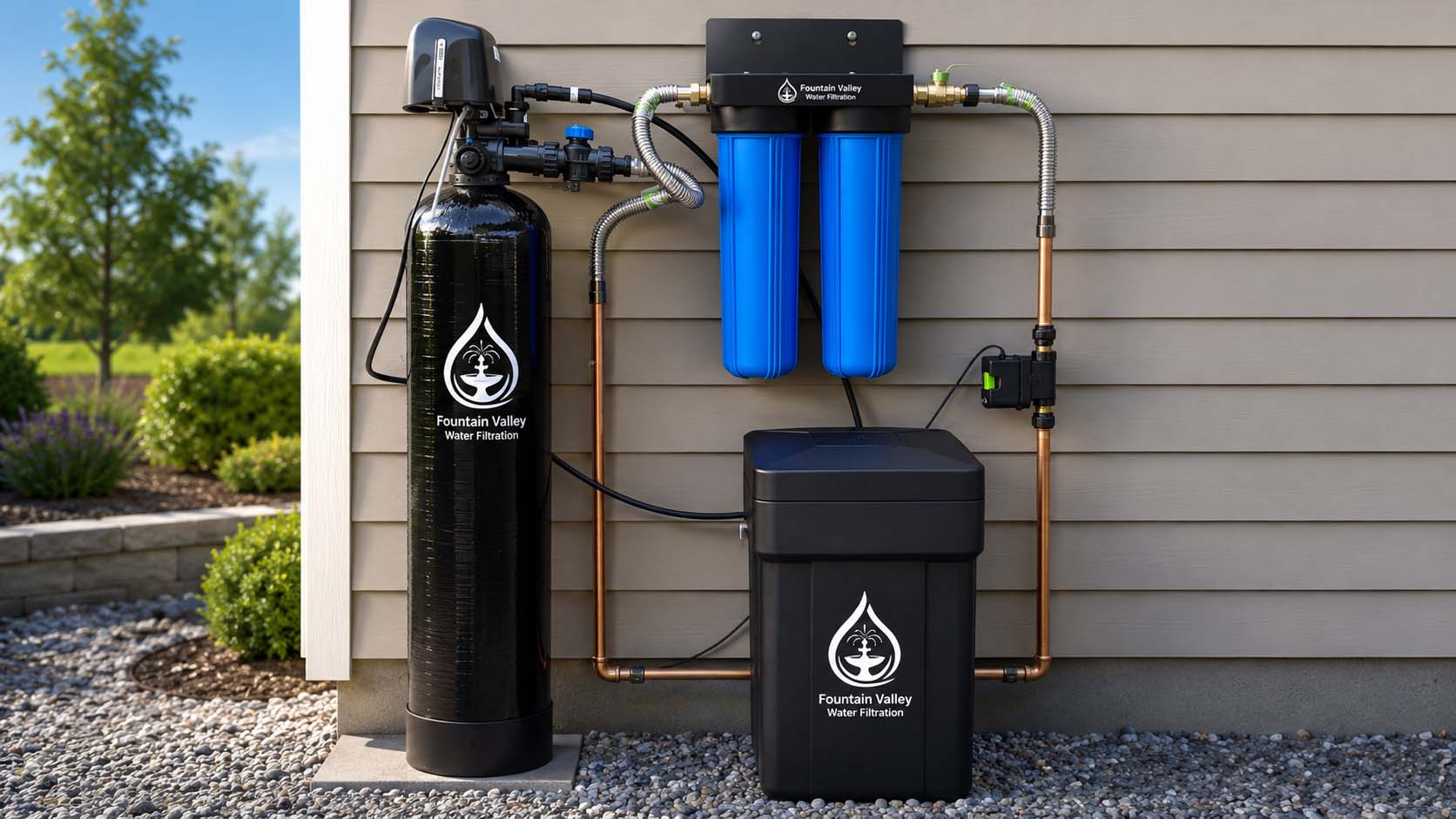
The most reliable way to remove the chlorine taste and smell is an activated carbon filter. Carbon is what pitcher filters, refrigerator filters, and under-sink units use to improve the taste and smell of water, and a carbon filter at the kitchen tap or for the whole house is the standard fix for chlorine in Fountain Valley. If you only want better drinking water, a point-of-use carbon filter is simple and inexpensive; if you want chlorine-free water at every faucet and showerhead, a whole-house carbon filter handles it. One thing worth knowing from the CDC: a whole-house filter that strips out chlorine can let more germs grow downstream in your plumbing, since the disinfectant is no longer there, which is one reason many homeowners choose point-of-use filtration for drinking water instead. When you shop for a carbon filter, look for one certified to NSF/ANSI Standard 42, the independent benchmark for reducing chlorine taste and odor, so you know the product actually does what it claims. If you are unsure whether the smell in your water is chlorine or something else, such as a musty or rotten-egg odor, a professional water test can identify the cause and point you to the right filter rather than guessing.
What about fish tanks, reptiles, and home dialysis?
Some uses need the disinfectant removed completely. The CDC warns that fish and other animals that live in water, along with reptiles like turtles and amphibians like frogs, should not be kept in water containing chlorine or chloramine, because they absorb water directly into their bloodstream and even low levels can harm them. Pet stores sell products that remove these disinfectants for aquariums. Home dialysis is another case: dialysis uses large amounts of water, and all chemical disinfectants must be removed before the water can be used, so anyone doing dialysis at home should follow their machine's instructions. One important difference: the CDC notes you can remove chlorine from water by letting it sit out for a few days, but you cannot remove chloramine that way, which is why knowing which one your utility uses matters for these specific uses.
Fountain Valley Chlorine Questions
The CDC notes that the smell is stronger when chlorine levels are higher or when there are more particles in the water, and utilities sometimes switch disinfectants or adjust levels during the year, so the intensity can change from time to time.
Boiling can drive off some chlorine, but it is not a practical everyday solution and it will not reliably remove chloramine. A carbon filter is the simpler, more consistent way to remove the taste and smell for drinking and cooking.
No. Removing chlorine at the point of use is fine for the water you drink and cook with. The concern the CDC raises is only about whole-house systems that remove the disinfectant from all your plumbing, where germs can regrow in the pipes downstream, which is a reason to weigh point-of-use versus whole-house treatment.